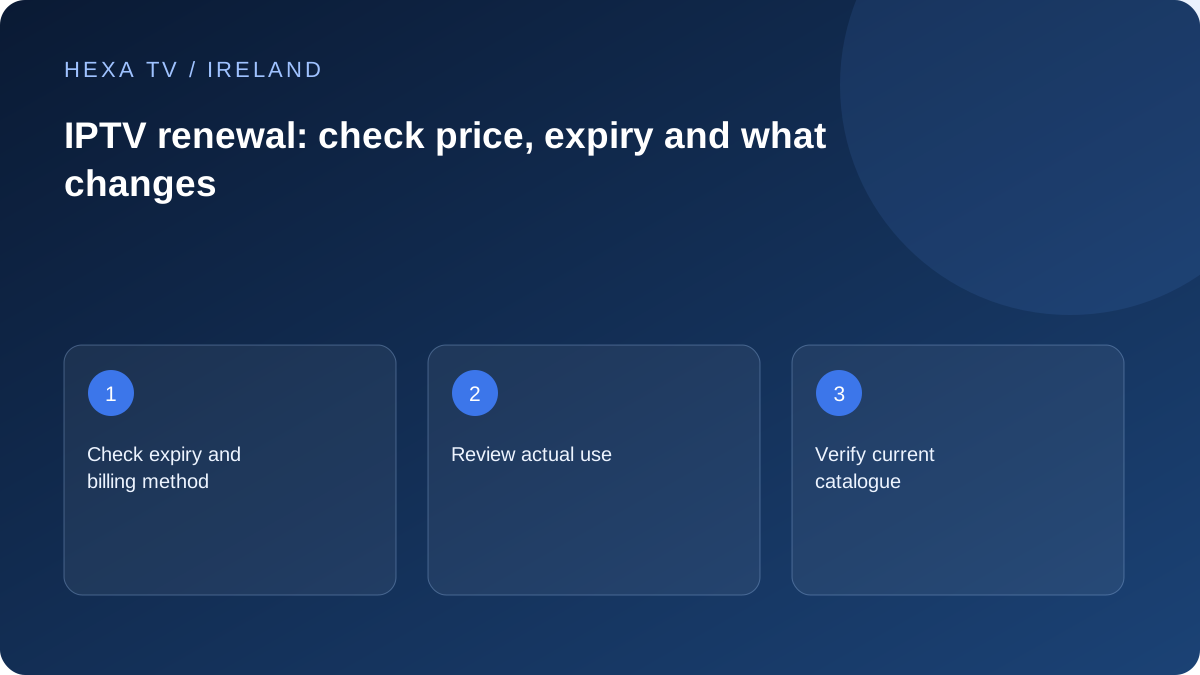
Separate expiry from renewal
Find the current expiry date and the actual renewal mechanism. A fixed term and automatic recurring billing are different. Read the provider's current terms and confirmation rather than inferring the arrangement from past behaviour.
If playback stops near expiry, check account state before reinstalling the app. A player licence may also have an independent term.
Review actual household use
List which programmes and devices are used regularly and how often viewing overlaps. You may no longer need the same stream allowance, or a new household routine may require more.
Recheck essential catalogue items and app support. A long-standing television can lose support for a particular app, and a provider catalogue can change.
Confirm the complete new total
Compare duration, currency, any player fee and the total payable. Ask whether the renewal adds time to the existing account or begins a separate term, and save the answer.
Check the current EUR total, screen allowance and renewal terms before payment. A displayed price does not extend an existing account or guarantee a future renewal price. Review the order summary and verified payment status.
Identify what is actually expiring
A content subscription, player licence and separate app purchase can have different dates. Record the service name and the term shown in the relevant account or order record. Do not assume that a playback error means every part of the setup has expired.
Check whether the next term requires a manual purchase or whether the actual agreement describes automatic renewal. This guide does not assign a renewal mechanism to a provider whose terms have not been confirmed. Keep the expiry date, next payment date and access start date separate if the service distinguishes them.
Use the household's real viewing pattern
Look back at which screens were used simultaneously, which programmes mattered and whether the household actually watched throughout the term. A four-screen option is not automatically necessary because four devices have the app installed. A shorter term may suit a seasonal need better than another year.
Record problems that remain unresolved: an essential title, a required subtitle track, an unsupported TV or an inconvenient remote routine. Renewal should not silently turn those unknowns into accepted features. Ask for current answers before deciding that the same package remains suitable.
| Review item | Useful household evidence | Possible implication |
|---|---|---|
| Concurrent viewing | Maximum ordinary simultaneous use | Keep or change the screen allowance |
| Programme needs | Specific titles or events still required | Recheck current catalogue rather than relying on last term |
| Device support | Current app availability on the actual models | Resolve a support change before committing |
| Unused months | Periods when nobody watched | Consider whether a shorter term fits |
| Unresolved faults | Recorded issue and support outcome | Do not treat renewal as a technical repair |
| Complete cost | Current quote and necessary extras | Compare the next term on current figures |
Compare the durations transparently
The one-stream totals are €8.99 for one month, €17.99 for three months, €27.99 for six months and €49.99 for twelve months. Each amount is charged in euros. Check the current offer and renewal arrangement before another purchase.
At those displayed prices, two six-month terms total €55.98 and one annual term is €49.99, a difference of €5.99. Four three-month terms total €71.96. The annual option has the lower arithmetic total for a full year, but requires the longer upfront commitment and only makes sense if the household needs and accepts that term.
Distinguish monthly equivalent from payment schedule
Dividing an annual total by twelve helps compare terms, but does not create monthly billing. A €49.99 annual amount has an approximate €4.17 monthly equivalent while the stated annual amount remains the relevant upfront commitment in this comparison.
Check the actual payment schedule and renewal conditions in the current offer. If taxes, app charges or other required costs apply, include them in the total. Do not describe an old introductory price as the new renewal price without confirmation. The comparison should use the amount the household would actually be asked to authorise.
Confirm what happens to the existing account
Ask whether renewing extends the current expiry, begins a new term immediately or creates a separate account. Check whether the same supported credentials and device assignments remain in use. These operational details can matter when the household still has paid time left.
Do not assume a second order merges automatically with the first. Keep the non-secret order reference and ask the service to clarify any ambiguity before another payment. A duplicate payment or separate account can complicate access without adding the intended term.
Check the essentials after a confirmed renewal
Once the service confirms the new account state, verify the expiry information, intended screen allowance and a small set of essential available sources. Recheck the ordinary household route and any settings affected by new credentials. Keep the confirmation with the payment record privately.
If the account is unchanged but a programme fails, investigate that failure on its own merits. Renewing does not prove a source fault is fixed, and an app reinstall does not prove a term has been extended. Keep commercial status and technical operation as two separate checks.
Make non-renewal an orderly option
If the household no longer needs the service, follow its documented non-renewal or cancellation process as applicable and retain the result. Keep any necessary account and payment records. Deleting the app alone is not a reliable way to communicate a commercial decision.
Use an existing official broadcaster or terrestrial route where it meets the remaining needs. The aim is a suitable viewing arrangement, not renewing every subscription by habit. Revisit a paid option when there is a clear programme or household requirement that justifies it.